Figures
The d-pad plays around the beat
The stick plays on the grid; the d-pad plays around it. Hold a d-pad direction while the left stick rests and the hi-hat plays a figure - a fixed pattern of offbeats and pickups - instead of a straight subdivision. Release, and it stops. Deflect the left stick and the stick wins: the d-pad speaks only while the stick is centred.
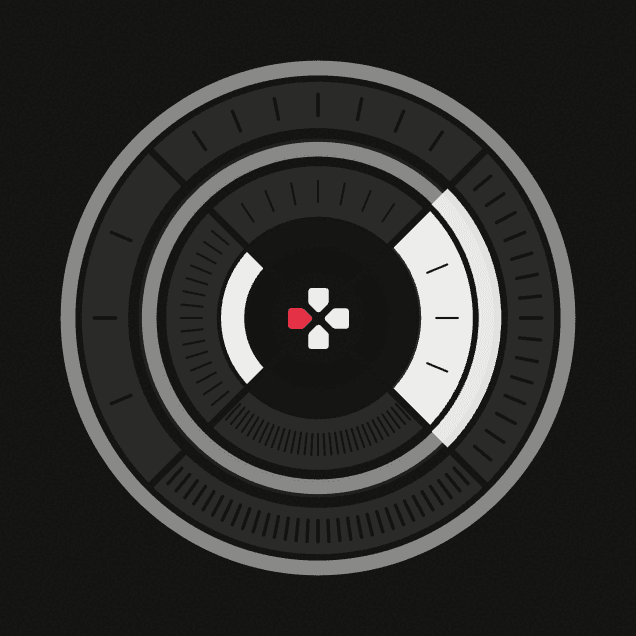
Counting a bar as 1 e & a, 2 e & a…, the four directions hold:
| Direction | Figure | Where it lands |
|---|---|---|
| D-pad left Left | The offbeat | The "&" of every beat |
| D-pad up Up | The double push | "& a" of every beat |
| D-pad down Down | The sparse off | The "&" of the 2 and the 4 |
| D-pad right Right | The pickup | The "a" before every beat |
Up and down are the offbeat at two densities; left and right place a single stroke on either side of it.
The corners
Hold two adjacent directions and the pair is a figure of its own, not a mash of the two:
| Corner | Where it lands |
|---|---|
| Up-left | "e &" of every beat |
| Up-right | "e & a" - the busiest figure |
| Down-left | The "e" after every beat |
| Down-right | The "a" before the 2 and the 4 |
Rolling between directions can sound a single corner stroke on the way through, the same way sweeping a stick across a tier boundary can - land on the shape you mean and it settles immediately.
They're part of the machine
A figure is the timekeeper by other means, so everything that shapes the timekeeper shapes it: strokes ride the same accent contour, the lean lifts them, and half-time stretches them - the offbeat of a half-time pulse lands on the 2 and the 4. What it sends is the timekeeper's note, and the open-hat hold silences it the same way.