Sounding
Stretch
Same chord, more room
Chords sit low and close by default. Pull the right trigger R2 and the chord stretches open - the top voices rise toward the melody register while the bass keeps its feet. Release and it comes home.
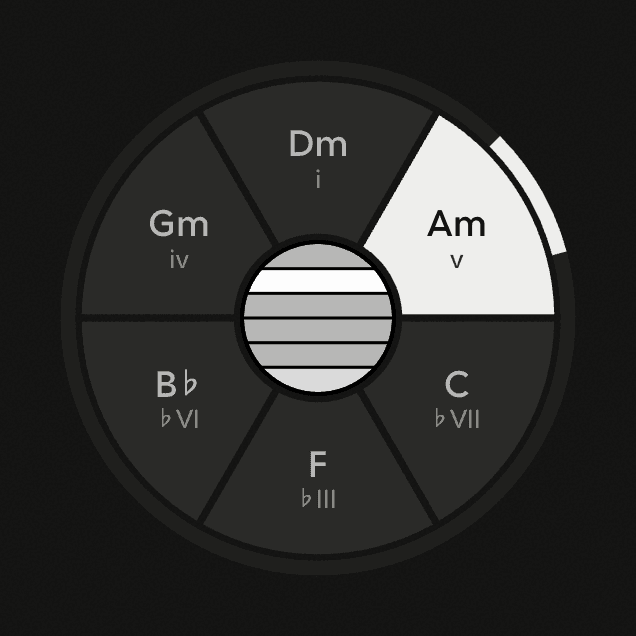
It's one continuous pull:
- A shallow pull opens the voicing. The low notes stay put while the top of the chord reaches upward, so a tight voicing opens out into a wide one.
- A deep pull sends the top up. Past the handover, the top of the chord keeps rising toward the peak of its range while the lowest strings hold their ground. The chord stretches across the instrument's whole range instead of bunching up high.
Where the opening hands over is the Stretch setting, drawn as a line you drag in the Instrument Settings panel. It's licensed; Demo Mode uses the midpoint.
How it behaves
- The chord never changes. Every position on the pull lands on the chosen chord's own tones, so there is no wrong point in the travel.
- It sets up the next strum. Notes already ringing are unaffected. Move the trigger, then play.
- Higher voicings ring brighter and shorter, following the instrument's normal behaviour across the register.
- High positions play open. The higher a note sits, the more room it keeps from its neighbours - a deep pull strums wide and clear, with the melody notes on top and the bass still under your lowest string.
- It combines with everything else. Change chord mid-pull and the new chord voices at the height you're holding.